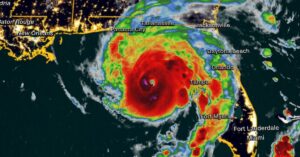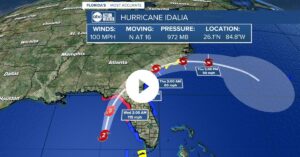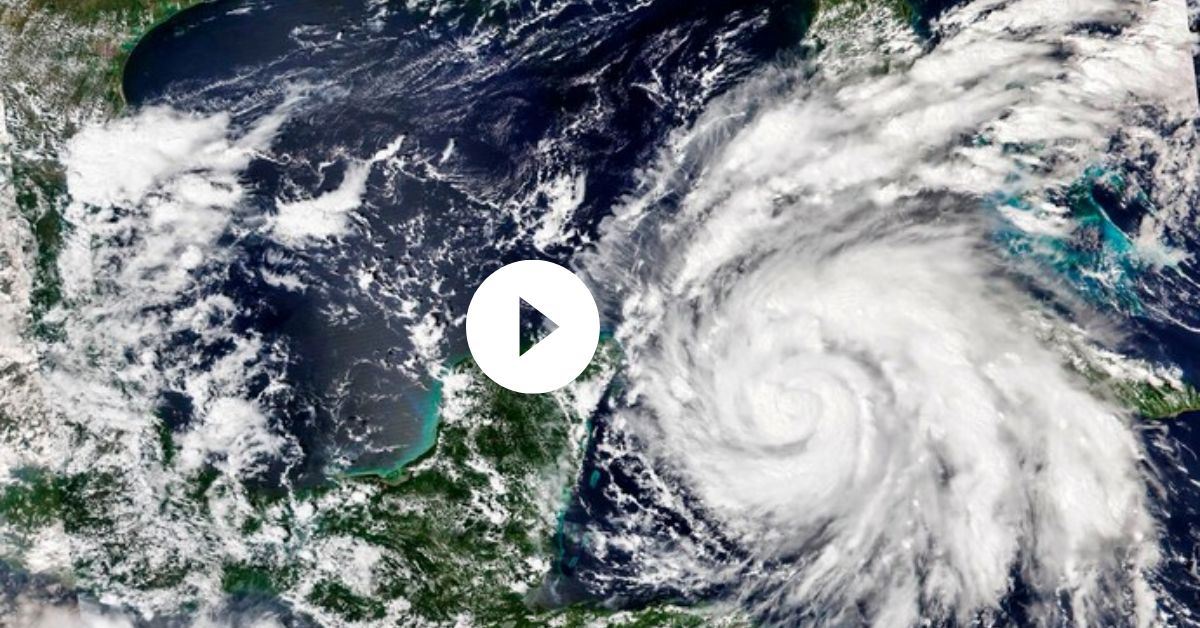
How Climate Change Is fueling Hurricanes? When Hurricane Idalia hit Florida’s Gulf Coast on Wednesday, it showed that the Atlantic’s “hurricane alley” might not be as quiet as meteorologists once thought it would be this year.
In May, scientists said that the US would have a near-normal Atlantic hurricane season. In mid-August, they changed their prediction and said that the US would have a more dangerous storm season.
This is because the top temperatures of the oceans around the world have been very warm this year. This summer, the temperatures in and around the Florida Keys were like a hot tub. Scientists said that this could cancel out the effect of El Nino, which usually makes hurricanes in the Atlantic less likely to happen.
Scientists haven’t figured out if climate change is affecting Idalia’s strength or behavior yet, but there is a lot of proof that storms like Idalia are getting worse.
Contents
Does climate change make storms worse?
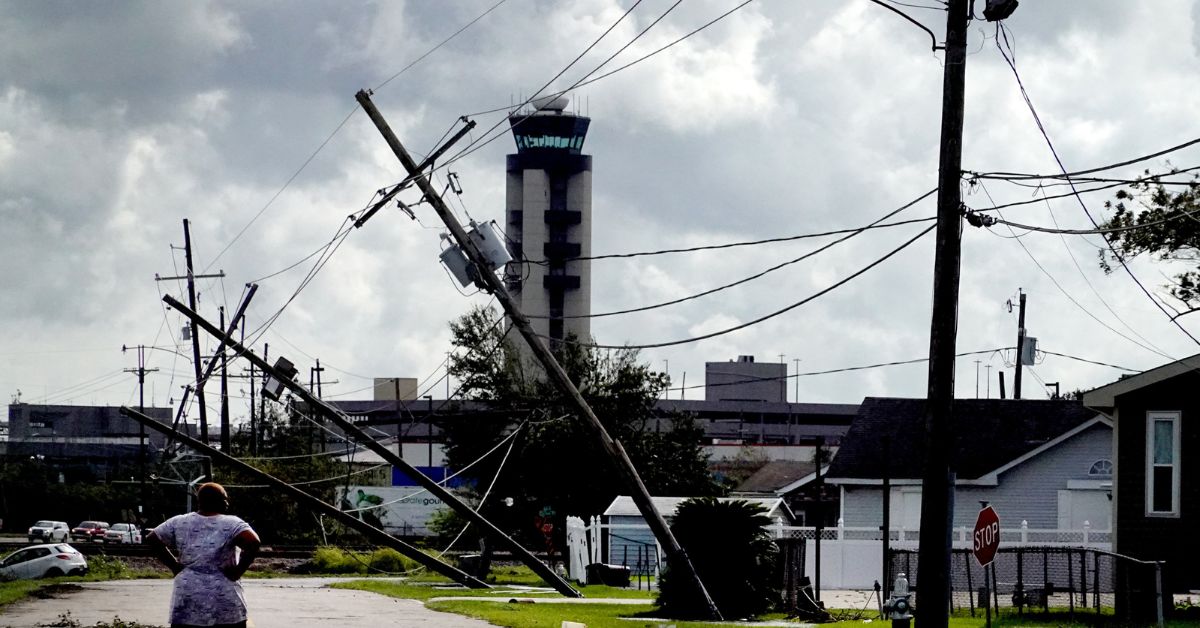
Yes, climate change is making storms more powerful by making them rainier, windier, and more intense overall. There is also proof that it is making storms move more slowly, which means they can dump more water in one place.
If it weren’t for the seas, climate change would make the planet much hotter.
But in the last 40 years, about 90% of the warmth caused by greenhouse gas emissions that trap heat has been taken up by the ocean. A lot of this ocean heat is near the surface of the water. This extra heat can make a storm bigger and make the winds stronger. This year is the worst of all.
Changes in the climate can also make it rain more during a storm. Because the air can hold more moisture when it’swarmer, water vapor builds up until clouds break and send down heavy rain.
Climate change increased the amount of rain that fell per hour in hurricane-force storms by 8% to 11%, according to a study published in April 2022 in the journal Nature Communications. The 2020 Atlantic hurricane season was one of the busiest on record.
The world has already warmed by 1.1 degrees Celsius more than it did before people started living on it. Scientists at the US National Oceanic and Atmospheric Administration (NOAA) think that a 2°C increase in temperature could make storm winds up to 10% stronger.
NOAA also thinks that the number of Category 4 or 5 storms, which are the most powerful, could go up by about 10% over the next 100 years. Since 1851, less than 20% of storms have reached this level of power.
More Articles:
- Category 3 Hurricane Idalia threatens to hit Florida as an even stronger storm in the coming hours
- Hurricane Idalia upgraded to Category 3 storm: US weather agency
What else is happening to storms because of climate change?
As the climate warms, more storms are likely to happen in more months of the year, changing the usual “season” for hurricanes. And storms are hitting land in places that have never been hit by them before. NOAA says that since 1851, more than 120 storms have hit Florida directly. This is the most of any state in the US.

In recent years, however, some storms are getting stronger and hitting land farther north than they did in the past. Scientists think this poleward shift may be caused by rising air and water temperatures.
Allison Wing, an atmospheric scientist at Florida State University, says that this trend is scary for places in the middle latitudes like New York, Boston, Beijing, and Tokyo, where “infrastructure is not prepared” for storms like these.
Even though it was only a Category 1 storm, Hurricane Sandy caused $81 billion in damage when it hit the Northeastern Seaboard in 2012. This made it the fourth most expensive hurricane in US history.
As for when they happen, hurricanes are common in North America from June to November. They are most common in September, after warm water conditions have built up all summer.
But, according to a study that came out in August in Nature Communications, the first named storms to hit US soil now do so more than three weeks earlier than they did in 1900. This moves the start of the season into May.
The same trend seems to be happening all over the world. Since 2013, cyclones have been forming in the Bay of Bengal in Asia earlier than normal, in April and May, before the summer monsoon, according to a study published in November 2021 in the journal Scientific Reports.
But it is not clear if climate change is changing how many hurricanes happen each year. In December, Nature Communications released a study by a group of scientists who found that the number of North Atlantic hurricanes has been increasing over the last 150 years. But more study needs to be done.
Florida Braces for Hurricane Idalia’s Category 4 Impact and Historic Surge
Hurricane Idalia strengthens with 110 mph winds
What makes storms happen?
Hurricanes are made up of two main parts: warm water in the ocean and wet, humid air. When warm water from the ocean disappears, its heat goes into the air. This makes the winds of the storm get stronger. Without it, storms can’t get stronger and will end up fading away.
What’s the difference between a cyclone, a typhoon, and a hurricane?
Even though these big storms are technically the same thing, they are called different things based on where and how they started.
Storms that form over the Atlantic Ocean or the central and eastern North Pacific are called “hurricanes” when their wind speeds reach at least 74 mph (119 kph). So far, they have been called “tropical storms.”
“Typhoons” are powerful, swirling storms that form over the Northwest Pacific in East Asia. “Cyclones” form over the Indian Ocean and South Pacific.
Stay tubed to our website Usacharged.com for more further updates.